
24/7
Emergency Lockout Services
ADA Operator Installation in Elizabeth for facilities improving accessible entry compliance
Building Entry That Accommodates All Visitors
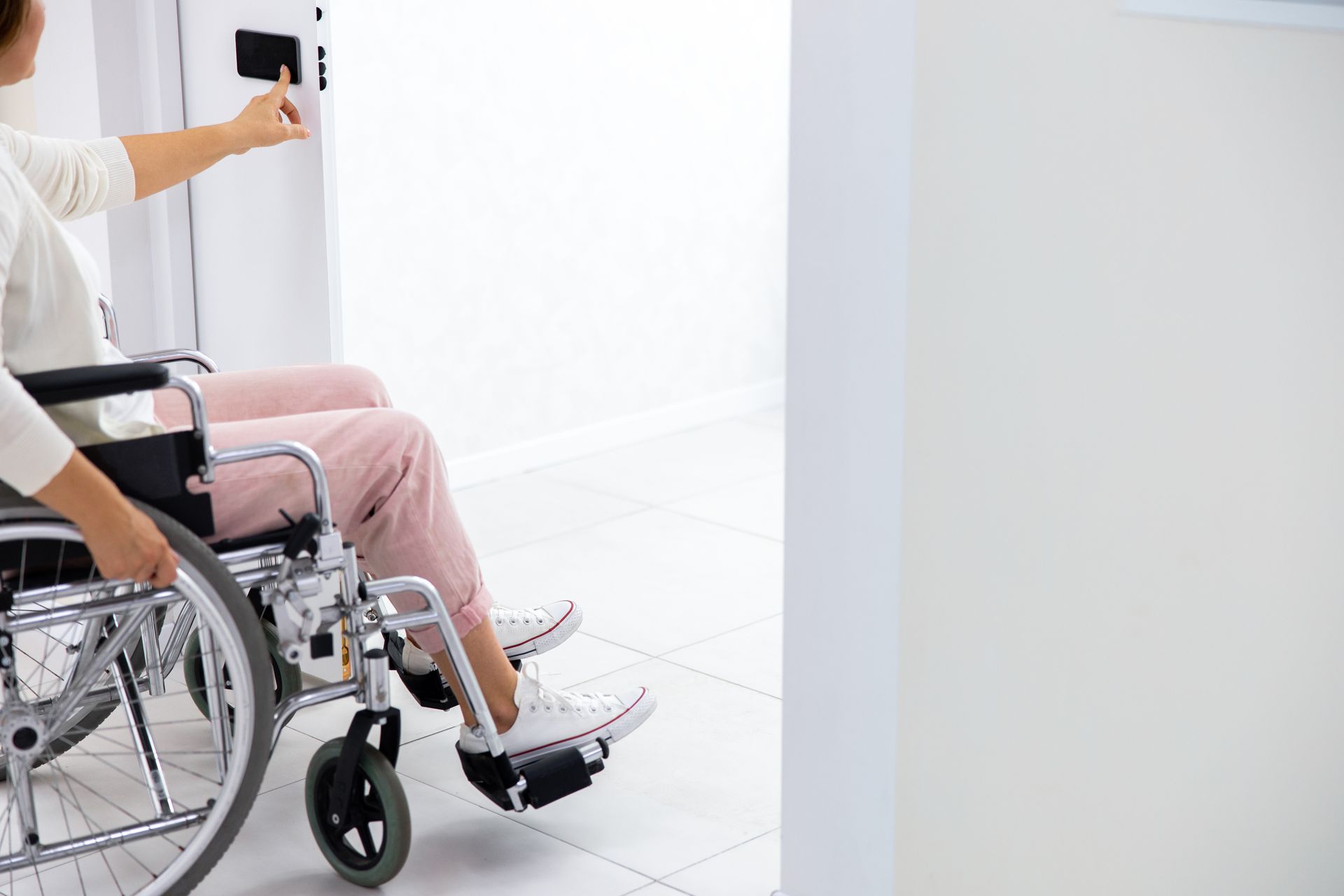
Heavy commercial doors create barriers for visitors using mobility aids, carrying supplies, or managing physical limitations that make manual door operation difficult. ADA door operators solve this by automating door movement through push-button activation, which transforms entry from a physical challenge into a simple press. Elbert County Key Works installs these systems in Elizabeth for medical offices where patients arrive with walkers or wheelchairs, retail locations prioritizing customer experience, and public buildings meeting accessibility standards that require barrier-free entry.
Installation involves mounting the operator mechanism above the door frame, connecting it to the existing door closer and hinge system, and wiring the activation button at a height and location compliant with accessibility guidelines. The operator's motor controls door speed during opening and closing cycles, which matters because ADA standards specify minimum opening time to allow safe passage and maximum closing force to prevent injury if someone remains in the doorway.
Request an accessibility consultation to assess door weight, frame compatibility, and activation placement for your specific entry points.
How Door Automation Addresses Access Barriers
The operator integrates with your existing door hardware by replacing or supplementing the manual closer with a motorized unit that receives signals from wall-mounted or post-mounted activation buttons. Installation requires calculating door weight and swing radius to select an operator with adequate force capacity, since undersized units struggle with heavy doors while oversized operators waste energy and create maintenance issues. Some installations include motion sensors that trigger automatic opening when someone approaches, though button activation remains more common because it prevents unnecessary door cycles triggered by passing foot traffic.
After installation, visitors notice that entry no longer requires pulling or pushing heavy doors, that the door remains open long enough for safe passage even at slower walking speeds, and that the system prevents the door from slamming during windy conditions common across Elizabeth's elevated plains location. The operator maintains consistent closing speed regardless of wind pressure or temperature changes that affect manual door closers.
The service includes programming hold-open time, adjusting closing speed to meet force limits, and verifying that the activation button sits within reach ranges specified by accessibility codes. Installation does not include door frame reinforcement or electrical circuit installation, which require separate carpentry and electrical work when existing infrastructure cannot support operator weight or power demands.
Common Questions About This Service
Property owners considering ADA operator installation typically ask about functionality and maintenance before moving forward with the work.
What door types work with ADA operators?
Most commercial-grade hinged doors accept operator installation, but extremely heavy doors, sliding doors, or doors with non-standard swing patterns may require specialized operator models or alternative accessibility solutions like automatic sliding door systems.
How does the system respond during power outages?
Most ADA operators default to manual operation during power loss, meaning the door functions like a standard manually operated entry until power restores, though some models include battery backup systems that maintain automatic operation temporarily.
What maintenance does an ADA operator require?
Operators need periodic inspection of the motor mechanism, adjustment of closing speed and force settings as components wear, and verification that activation buttons remain responsive, with most manufacturers recommending professional service annually or after significant weather events that stress door systems.
When do Elizabeth businesses need ADA operator installation?
Commercial properties undergoing renovations that trigger updated accessibility compliance, new construction projects, or existing buildings where accessibility complaints or legal requirements indicate that manual door operation creates discriminatory barriers all benefit from operator installation.
How is activation button placement determined?
Buttons must sit between 34 and 48 inches above finished floor level, at least 18 inches from internal corners, and within reach of someone using a wheelchair without requiring them to move through the door swing path, which means placement varies based on door configuration and surrounding wall space.
Elbert County Key Works handles ADA operator installation for commercial facilities and public buildings in Elizabeth where automated entry improves accessibility and visitor experience. Schedule an evaluation to review your door systems and discuss compliance requirements specific to your property type.